The Fed Says Cash Is Now 1 in 7 Payments — Vending Operators Are Reconciling a Shrinking Slice
The Federal Reserve released its 2026 Diary of Consumer Payment Choice in May, and the headline finding is one of those numbers that sounds unremarkable until you’re the person emptying a bill validator: U.S. consumers now pay with cash for about 1 in 7 payments.
The longer arc is steeper. The average consumer made six cash payments a month in 2025, down 57.1% from 14 a month in 2016. The share of consumers who used cash at all in the prior 30 days fell to 81%, from a recent peak of 87% in 2023.
For anyone running vending machines, this isn’t an abstract macro trend. It’s a direct description of what’s changing inside your coin box.
The Age Split Is the Operator’s Real Story
The Fed’s demographic breakdown is where this gets tactical: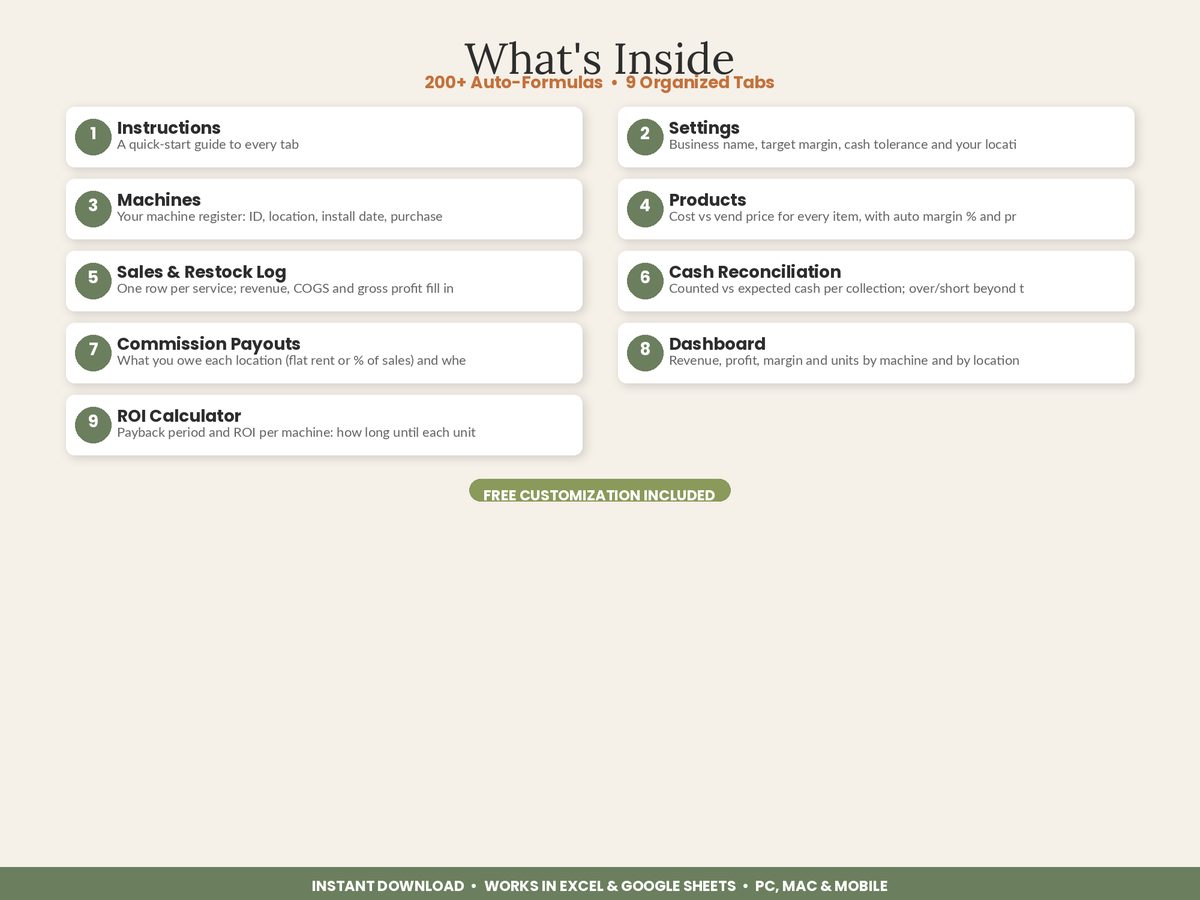
| Age group | Avg cash payments per month |
|---|---|
| 18–24 | 2 |
| 25–54 | 5 |
| 55+ | 10 |
A machine in a college hall and a machine in a manufacturing plant with a long-tenured workforce are not the same machine, and this table is why. Site demographics now predict your cash-versus-card mix more reliably than anything about the machine itself.
There’s a counterpoint in the same report worth holding onto, though. Cash use for small-value transactions under $25 has been flat at about five per consumer per month since 2021 — down from 11 in 2016, but stable for five straight years now. Cash didn’t disappear from the exact niche vending occupies. It shrank and then settled.
Vending Ran Ahead of the Broader Economy
The vending-specific numbers moved faster than the national ones. Cantaloupe’s Micropayment Trends Report found 71% of U.S. vending transactions were cashless in 2024 — a 17% jump in one year — with contactless tap-to-pay making up 77% of those cashless sales. Micro markets ran 96% cashless and Smart Store transactions 100%.
And the money is different depending on how it’s paid: the average cashless vending transaction was $2.24 against $1.78 for cash, a 37% larger basket.
That gap is the argument for card readers stated as plainly as it can be. It’s also the argument for something less obvious.
Why This Makes Reconciliation Harder, Not Easier
The intuition is that less cash means less cash to count, so cash handling gets simpler. In practice the opposite happens, for two reasons.
First, the reconciliation math breaks if you don’t split channels. Expected cash is units sold times vend price minus card sales. Run the calculation against total sales when 71% of your volume went through the reader and every single collection shows a massive phantom shortage. Operators hit this once, conclude the exercise is broken, and stop reconciling — right at the moment their cash slice became small enough that a real loss hides inside normal variance.
Second, small absolute numbers make patterns harder to see. A $6 discrepancy on a $300 cash collection is 2% and looks like noise. The same $6 on an $85 cash collection is 7%. As the cash slice shrinks, the same dollar loss becomes a larger proportional signal — but only if you’re tracking the proportion.
The practical fix is boring and works: log expected cash and counted cash per collection, set a tolerance ($2.00 or 1% of expected, whichever is larger is a reasonable default), and let a formula flag anything outside it. Then a machine that’s short on nine of eleven collections stops being a hunch.
The Vending Machine Business Tracker from ReadySheetGo handles this on a dedicated Cash Reconciliation tab — you set the tolerance once in Settings, enter expected and counted per collection, and over/short plus a red status flag calculate automatically, alongside a deposited yes/no so undeposited cash never goes untracked.
Three Adjustments Worth Making This Quarter
Match acceptance to the site’s demographics. A machine serving an 18–24 population against a national average of two cash payments a month is leaving real money in the hallway without a reader. The 37% larger cashless basket compounds that.
Don’t rip the cash out. Sub-$25 cash use has been stable for five years and 55+ consumers still average ten cash payments a month. Cash-only is a ceiling; card-only is a lockout at the wrong site.
Separate the two in your books from day one. Not because the accounting demands it, but because the cash channel is the only one that can physically walk away, and you can’t watch it if it’s blended into a single “collections” number.
The Bigger Point
The Fed’s framing this year was that consumer payment habits have held remarkably steady over the past three years even as options multiplied. Cash has been the third-most-used instrument for six straight years running. It’s not vanishing — it’s settling into a smaller, older, more predictable role.
For vending, that means the answer isn’t picking a side. It’s knowing your mix per machine, and reconciling the shrinking half properly instead of assuming it’s too small to matter.
Featured on ReadySheetGo
Vending Machine Business Tracker — 9 tabs for new and scaling vending operators. Machine register, product sheet with auto margin % and profit-per-unit flags, sales & restock log where revenue and COGS fill in automatically, cash reconciliation with configurable over/short tolerance and deposit tracking, commission payout tracker for flat rent or % of sales, a dashboard ranking machines and locations by profit, and an ROI Calculator with payback months per unit. Pre-filled with sample data. Works in Excel and Google Sheets, no macros. Instant digital download — $13.99.
Sources: Federal Reserve Financial Services — 2026 Diary of Consumer Payment Choice · Federal Reserve — 2026 Diary press release · Cantaloupe — 2025 Micropayment Trends Report
Frequently Asked Questions
How much cash do U.S. consumers still use in 2026?
The Federal Reserve's 2026 Diary of Consumer Payment Choice found consumers still pay with cash for about 1 in 7 payments. The average consumer made six cash payments a month in 2025, down 57.1% from 14 a month in 2016, and 81% of consumers used cash at least once in the prior 30 days, down from a peak of 87% in 2023.
Do younger consumers use cash at vending machines?
Rarely. The Fed's 2026 Diary reports consumers aged 18 to 24 made an average of just two cash payments per month, compared with five for ages 25 to 54 and ten for those 55 and older. For a vending machine placed at a college, gym, or young-workforce office, card and mobile acceptance is effectively a requirement rather than an upgrade.
What percentage of vending transactions are cashless?
Cantaloupe's 2025 Micropayment Trends Report found 71% of U.S. vending machine transactions were cashless in 2024, a 17% increase year over year, with contactless tap-to-pay making up 77% of cashless sales. Micro markets ran 96% cashless and Smart Store transactions 100% cashless.
Should a vending machine still accept cash in 2026?
For most locations, yes — the Fed data shows cash use has declined but stabilized for small-value purchases, at about five sub-$25 cash payments per consumer per month, unchanged since 2021. Older demographics and certain site types still pay cash regularly. The practical answer is to accept both and track them separately, since only the cash portion can go missing physically.