A Wedding Guest List Spreadsheet to Track Thank-You Cards and Gifts Received
The wedding’s over, the photos are back, and now there’s a quieter job waiting: the thank-you notes. Somewhere there’s a pile of cards, a few checks, a registry confirmation email or two, and a growing worry that you’re going to thank someone twice and forget someone else entirely. You start a note to your cousin, then can’t remember if she gave the serving bowl or the gift card — and whether you already mailed her a card last week. This is the part of the wedding no one warns you about, and it’s almost always a tracking problem, not a memory problem.
The reason gift and thank-you tracking goes sideways is that the information arrives in scattered pieces at different times — a gift before the wedding, a check at the reception, a late package three weeks after — while the list of who to thank lives in your head. The fix is to keep the gift record and the thank-you status on the same guest list you already built, so every present has a home the moment it arrives and every note has a clear status.
Full walkthrough of the template used in this guide.
Why the Shoebox Method Fails
Most couples default to some version of the shoebox: cards in one place, a mental note of the cash gifts, and the registry’s own tracking for shipped items. It falls apart for a few predictable reasons.
The pieces never live together. A physical card, a Venmo notification, and a registry shipment are three separate systems, and none of them knows your guest list. Cash leaves no trace. A check gets deposited and the memory of who wrote it fades within weeks — and as more guests give through cash funds and payment apps, more of your gifts have no physical object to remind you later. And there’s no status. Even if you know who gave what, a pile of cards can’t tell you which thank-yous you’ve already sent, so you either risk a double or freeze up and send none. The result is the classic post-wedding stall, where the notes sit undone for months.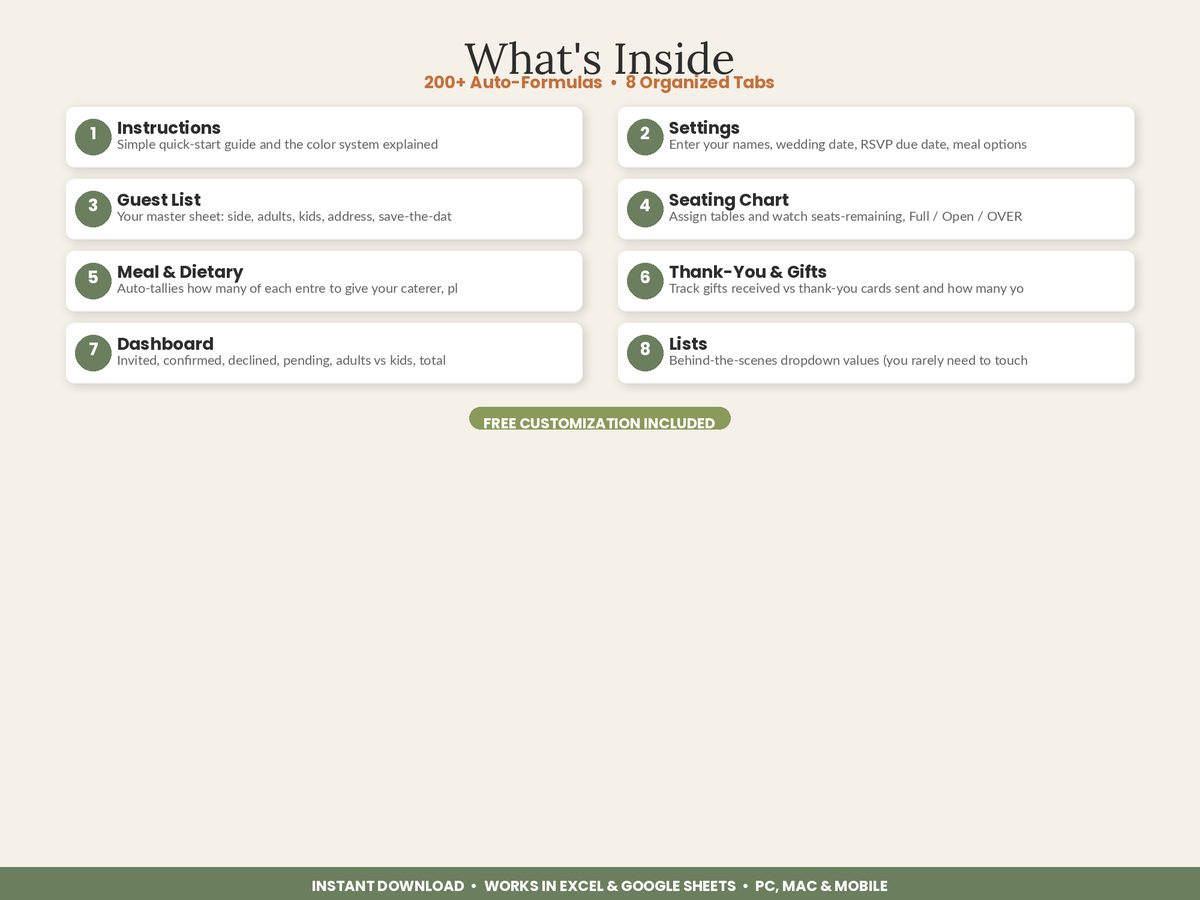
The Core Idea: Two Columns on the List You Already Have
You don’t need a new system. You need two columns on the guest list you built for invitations and RSVPs. Because each guest already has a row — with their name and mailing address right there — you add a Gift Received column and a Thank-You Sent column, and the whole problem becomes visible in one place.
When a gift arrives, you write what it was on that guest’s row: “stand mixer (registry),” “$150 check,” “Venmo $100,” “gift card — $50.” The moment you log it, you’ll never again wonder who gave what, because the answer is sitting next to their name and address. Then, when you write and mail their note, you mark Thank-You Sent. Now the row tells the complete story: who they are, where they live, what they gave, and whether you’ve thanked them.
This is how the Wedding Guest List, RSVP & Seating Chart Manager handles the post-wedding stretch — a dedicated Thank-You & Gifts view that counts gifts received against thank-you cards sent, all reading from the same guest rows you set up for the invitations.
Step 1: Log the Gift the Day It Arrives
The single habit that saves you is logging gifts as they come in, not in one overwhelming session later. A gift that shows up two weeks before the wedding gets a one-line note on that guest’s row that day. A check handed over at the reception gets entered the next morning while you still remember the envelope. Keep the description short but specific enough to write a warm, personal note from — the item, or the amount, and anything memorable about it.
Step 2: Capture Cash and App Gifts in Words
Physical gifts leave evidence; cash doesn’t. This is the entry most couples skip and most regret. When a guest gives money — a check, a cash-fund contribution, an app transfer — the written line on their row is the only record you’ll have when you sit down to write notes. Treat “$100, Venmo” as just as important to log as the boxed blender, because in a few weeks it will be the only thing standing between you and a forgotten thank-you.
Step 3: Mark Each Card as You Send It
The Thank-You Sent column is what turns a gift log into a finish line. Every time you mail a note, mark it. This does two things at once: it guarantees you never send the same person two cards, and it makes your remaining work concrete. You’re not staring at a vague, guilt-inducing “write the thank-yous” task — you’re looking at a specific, shrinking list of rows still marked unsent.
Step 4: Work the Gap, a Few Notes at a Time
The real power comes from the gap between the two columns. Filter to rows where a gift is logged but no card has been sent, and you’re looking at exactly who you owe — nobody more, nobody less. A summary that counts gifts received against cards sent shows how many you have left, so you can knock out five notes on a Sunday and watch the number fall. Etiquette generally suggests getting thank-yous out within about three months; a running gap list makes that a manageable rhythm instead of a single dreaded marathon.
Step 5: Keep the Addresses in Reach
Because the gift and thank-you columns sit on the same rows as your mailing addresses, addressing the envelopes is already done. There’s no cross-referencing a separate contact list, no hunting for a ZIP code — the person, their gift, their note status, and where to send it are all one line. That tight loop between “what they gave” and “where to mail the thanks” is what keeps the whole task moving.
Turn a Months-Long Guilt Trip Into a Checklist
Thank-you notes get put off because the information is scattered and the finish line is invisible. Put the gift record and the thank-you status right on your guest list, log cash gifts in words the day they arrive, and mark each card as it goes out — and what used to be a lingering source of guilt becomes a simple filtered list you work down at your own pace, confident that everyone who gave gets thanked exactly once.
Featured on ReadySheetGo
The Wedding Guest List, RSVP & Seating Chart Manager includes a Thank-You & Gifts tracker that reads straight from your guest list: log what each household gave, mark each thank-you card as sent, and see gifts received counted against cards sent so the outstanding notes are always clear. Names, mailing addresses, RSVPs, meals, seating, and gifts all live on the same connected 8-tab workbook, so the address you need is already on the row. Sample data is pre-filled to show how it works. Works in Excel and Google Sheets, PC and Mac. One-time purchase — $16.99 instant download.
Frequently Asked Questions
How do I keep track of wedding gifts and thank-you notes?
Add two columns to your existing guest list: one for the gift received (a short description or amount) and one for whether the thank-you card has been sent. Because the gift log lives on the same row as each guest's name and address, you always know who gave what, who still needs a note, and where to mail it — without a second list or a shoebox of cards.
Is there a right amount of time to send wedding thank-you cards?
A common etiquette guideline is to send thank-you notes within about three months of the wedding, and within two to three weeks for gifts that arrive before the day. A spreadsheet that flags every guest with a gift logged but no card sent turns that deadline into a simple to-do list you can work through a few notes at a time.
How do I track cash and registry gifts, not just physical presents?
Use the gift column for a short note of what was given — '$150 check,' 'Venmo $100,' 'stand mixer from registry,' or 'gift card.' As cash funds and app-based gifting grow, a written record on each guest's row matters more than ever, because there's no box or card to jog your memory later when you sit down to write notes.
What's the easiest way to know who I still need to thank?
Filter your guest list to rows where a gift is logged but the thank-you column is still blank. That list is exactly who you owe a note. A spreadsheet that counts gifts received against cards sent shows the gap at a glance, so nothing slips through in the busy weeks after the wedding.