How to Budget for a New Puppy: First-Year Costs in a Spreadsheet
Bringing home a puppy is pure joy for about a week — right up until the bills start arriving in waves. The vaccine series. The spay or neuter. The crate you bought, then the bigger crate when the first one stopped fitting. The chewed-through everything. The first “why is he limping” vet visit. The first year of dog ownership is, by a wide margin, the most expensive one, and new owners almost never see it coming because the costs don’t arrive evenly — they cluster at the start.
Here’s how to budget for it properly and track it from day one, so the first year is planned instead of a rolling series of financial surprises.
Full walkthrough of the template used in this guide.
Why Year One Costs So Much More
Every year of dog ownership has recurring costs. Year one stacks a full set of one-time startup costs on top of them, and most of those startup costs hit in the first three to four months.
Industry estimates commonly put first-year puppy costs between roughly $1,500 and $4,000 or more, depending on breed, size, and whether you count the adoption fee or breeder price. The startup items alone — spay/neuter, the initial vaccine rounds, microchip, crate, and starter gear — can add $800 to $2,000 before you’ve bought your first bag of food. Understanding that the money is front-loaded is the whole key to budgeting for it: you’re not spending “$X a month evenly,” you’re absorbing a big lump early and then settling into a lower recurring rate.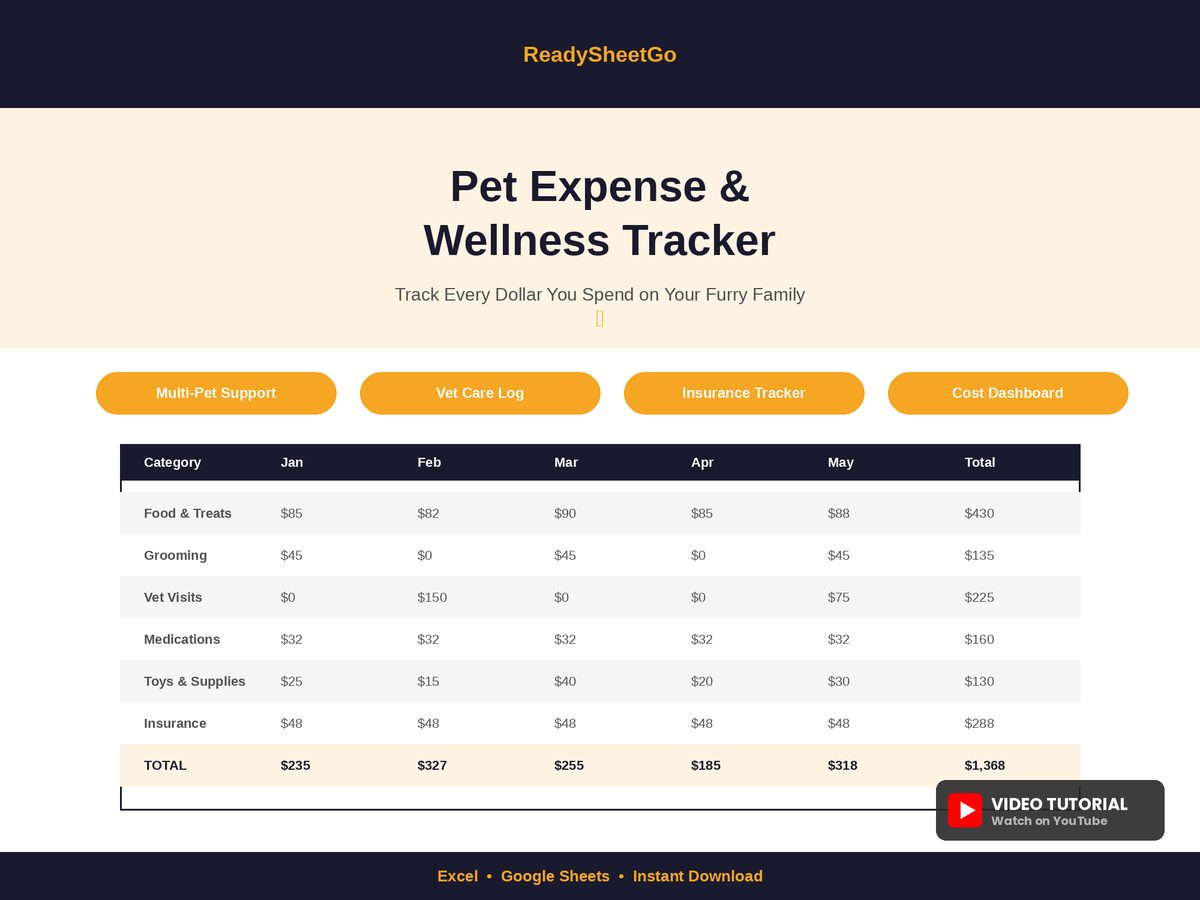
The One-Time Startup Costs
Budget for these up front, because they’re mostly non-negotiable and they come fast:
- Adoption or purchase price — anywhere from a shelter fee to a breeder’s four figures
- Initial vaccine series — typically three rounds over the first months
- Spay or neuter — a significant one-time surgical cost
- Microchipping — often bundled with an early vet visit
- Crate, bed, and carrier — and possibly a second crate as they grow
- Leash, collar, harness, bowls — the daily-use starter kit
- Puppy-proofing and initial supplies — gates, cleaning supplies, chew toys
Put every one of these in your tracker as it happens. Not only does it keep your budget honest, it builds the record you’ll want later — the vaccination dates, the microchip number, the vet’s contact info.
The Recurring Costs That Start Right Away
Alongside the startup lump, the ongoing categories begin immediately:
- Food — puppy formula, and you’ll go through it faster than you’d expect
- Preventatives — monthly flea, tick, and heartworm protection
- Routine vet care — checkups and the boosters that follow the initial series
- Training — puppy classes are cheaper than fixing behavior problems later
- Grooming — starts early for coated breeds
- Supplies — replacements for everything they chew or outgrow
- Emergency fund — start it now, while nothing’s wrong
Puppies burn through the “supplies” line faster than adult dogs because they chew, grow, and destroy on a schedule. Budgeting a little extra there in year one is realistic, not pessimistic.
Track It From Day One, Not Day 300
The mistake new owners make isn’t overspending — it’s not watching. When every purchase lands in the same “pet stuff” blur on a debit card, you reach tax time or year-end with no idea what the puppy actually cost, and no baseline to budget the second year against.
Set up the tracker before the puppy comes home. Log each expense once, tag it to a category, and let the totals build. Keep a separate vet log for the vaccine series with dates and next-due reminders, so you never miss a booster during the busiest, most sleep-deprived stretch of new ownership.
The Pet Expense & Wellness Tracker from ReadySheetGo is built for exactly this moment. It holds your puppy’s profile — name, breed, DOB, weight, microchip number, and vet contacts — logs nine expense categories with automatic monthly and annual totals, keeps a vet care log with vaccination tracking, and starts a pet emergency fund with visual progress. By the time the startup costs taper off around month four or five, you’ll have a real monthly baseline instead of a guess.
Use Year One to Predict the Rest
Here’s the payoff. Once the startup spike passes and you have a few clean months of recurring costs tracked, you know your dog’s real monthly rate — and you can project it forward. A lifetime cost projector turns that number into the full commitment: a dog that settles into $150 a month after year one is a five-figure decision over a 12–15 year life, and the senior years will cost more than the middle ones.
That’s not a reason to panic. It’s the reason to start the emergency fund now, budget the recurring rate now, and enjoy the puppy without the money being a constant low-grade worry. The owners who love the first year most are usually the ones who saw the bills coming.
Featured on ReadySheetGo
Pet Expense & Wellness Tracker — Start your new puppy off on budget. Store your pet’s full profile, track 9 expense categories with automatic monthly and annual totals, log the vaccination series with next-due reminders, build an emergency fund with visual progress, and project the lifetime cost — 8 tabs and 200+ auto-calculating formulas across up to 4 pets. Works in Excel and Google Sheets, no macros. Instant digital download — $12.99.
Frequently Asked Questions
How much does a puppy cost in the first year?
The first year is the most expensive year of dog ownership because it stacks one-time startup costs on top of the normal recurring ones. Industry estimates commonly put first-year puppy costs between roughly $1,500 and $4,000 or more, depending on breed, size, and whether you count the adoption or purchase price. Startup items — spay/neuter, the initial vaccination series, microchipping, crate, and supplies — can easily add $800 to $2,000 on their own before you've bought a single bag of food.
What are the one-time startup costs for a new puppy?
The big one-time costs are the adoption or purchase price, the initial vaccine series (usually three rounds), spay or neuter surgery, microchipping, and the starter gear — crate, bed, leash and collar, food and water bowls, and training basics. Many of these happen in the first three to four months, which is why new owners get surprised: the costs cluster at the start rather than spreading evenly across the year.
What recurring costs should I budget for a puppy?
After the startup phase, budget for food, monthly flea/tick and heartworm prevention, routine vet care, training classes, grooming if your breed needs it, and a growing emergency fund. Puppies also go through supplies faster than adult dogs — they chew through toys and outgrow collars and crates. Tracking these categories separately from day one gives you a real monthly baseline by the time the startup costs taper off.
How do I keep track of puppy expenses and vet visits?
Use a spreadsheet with separate tabs for expenses and vet care so nothing gets lost. Log each purchase under a category to see where the money goes, and keep a vet log of the vaccination series with dates and next-due reminders so you never miss a booster. A tracker that also holds your puppy's profile — breed, DOB, weight, microchip number, and vet contact — keeps every record you'll be asked for in one file.