38% of Pet Owners Can’t Cover an Emergency Vet Bill Without Going Into Debt, 2026 Survey Finds
Here’s a number that captures the quiet financial anxiety of modern pet ownership: 38% of pet owners say they couldn’t cover an emergency vet visit without taking on debt — even though nearly nine in ten felt financially prepared before they ever brought a pet home. That gap between how ready people felt and how ready they actually were, reported by Fortune and Forbes from 2026 survey data, is the whole story.
The bills that expose the gap aren’t exotic. The average emergency vet visit runs about $1,035, and for a lot of owners the financial breaking point starts right around $1,000 — which is precisely where many emergencies begin. Serious cases climb into the thousands, and some ER situations reach $8,000 or more.
Full walkthrough of the template used in this guide.
Willing to Pay, Unable to Afford It
The most human finding in the data is a contradiction. A 2026 report found that 91% of pet owners would go into debt to save their pet’s life — and yet nearly half (46%) said rising vet costs had caused them to delay or skip care in the past year. People are overwhelmingly willing to pay. They just don’t have the money available at the moment of crisis.
The aftermath shows up in the debt statistics. Roughly 1 in 3 owners are still paying off debt from a pet’s emergency care. Nearly 2 in 5 (37%) used credit or took on debt to cover vet costs in the past 12 months. And among those who put it on a credit card, nearly one in three took more than six months to pay it off. The problem isn’t love or willingness — it’s that almost nobody has cash set aside for the specific, predictable-in-the-aggregate event of a pet emergency.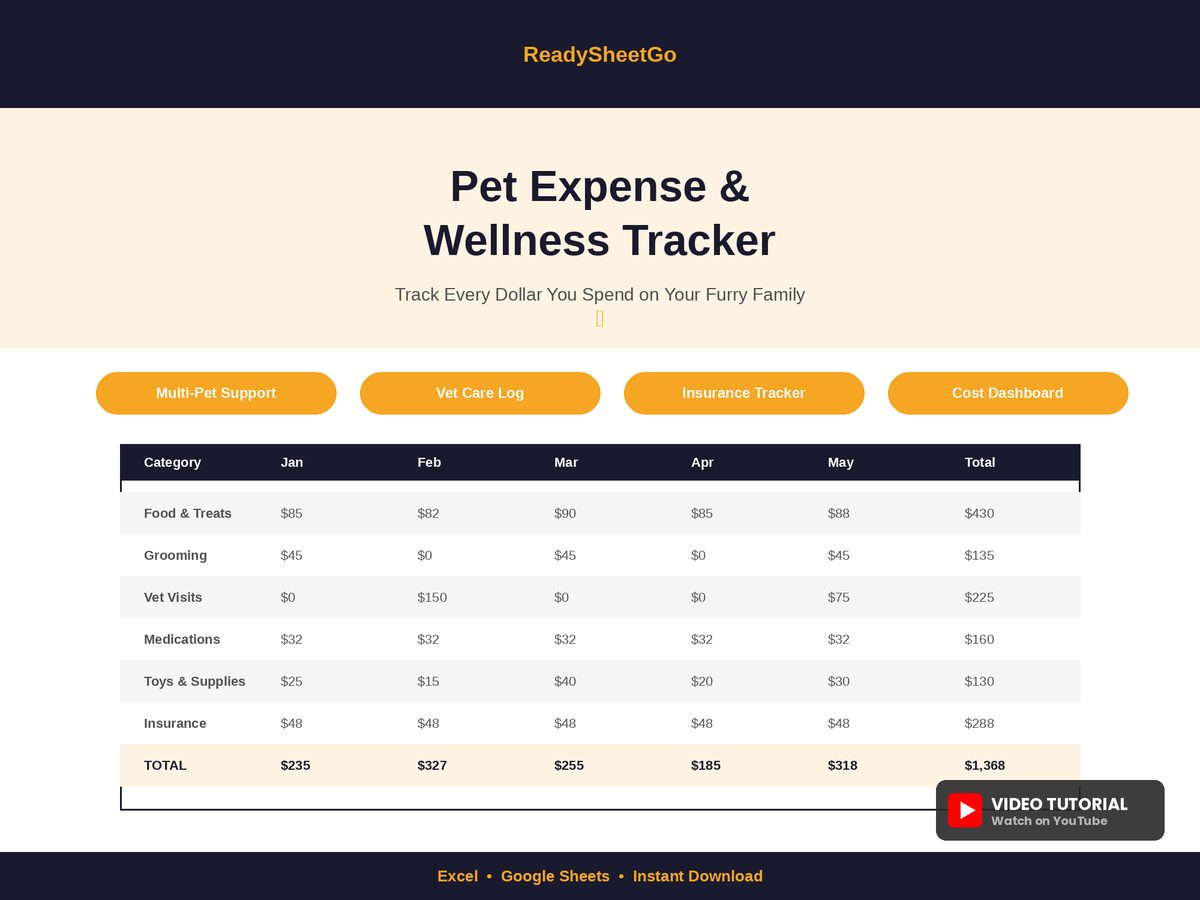
The Fix Is Boring and It Works: Fund It in Advance
An emergency you can predict in the aggregate isn’t really an emergency for your budget — it’s a planned expense with an unknown date. You know, statistically, that a serious vet bill is coming at some point in your pet’s life. The only unknown is when. That’s exactly the kind of risk a dedicated fund is built for.
The move is simple: start a pet emergency fund now, set a target, and contribute a fixed amount every month so the money exists before the crisis, not after. A reasonable goal is enough to absorb a serious emergency without borrowing — many owners build toward at least $1,000 to $2,000 per pet, more for large breeds or pets prone to expensive conditions. It doesn’t have to be funded overnight. It has to be started, and tracked, so you can see it grow toward the number that means you’re actually protected.
That’s what turns the panicked ER question — “can I even afford this?” — into a calm one: “the fund covers it.” The Pet Expense & Wellness Tracker from ReadySheetGo includes a dedicated Emergency Fund tab where you set a savings goal, log each contribution, and watch a visual progress bar climb toward it. Paired with a 9-category expense tracker and a vet care log, it does the thing the surveys reveal most owners never did: it makes the financial preparation real instead of assumed.
Don’t Be the 38%
The uncomfortable truth in the 2026 data is that “I feel prepared” and “I am prepared” are two very different things — and most pet owners discover the difference at the worst possible moment, in an ER lobby with a card in hand. You can’t control when your pet gets sick or hurt. You can control whether the money is already waiting when it happens.
Start the fund this month. Even a small, tracked, automatic contribution puts you on the right side of the statistic — and gives your pet the one thing the survey shows so many owners couldn’t provide in time: care without hesitation.
This article discusses financial preparedness, not medical or insurance advice. Emergency costs and appropriate savings targets vary by pet, breed, and region.
Featured on ReadySheetGo
Pet Expense & Wellness Tracker — Build the pet emergency fund the surveys say most owners never did. Set a savings goal, log contributions, and track visual progress on the dedicated Emergency Fund tab. Plus a 9-category expense tracker with monthly and annual totals, a vet care log, medications tracker, pet insurance ROI calculator, and a lifetime cost projector — 8 tabs, 200+ formulas, up to 4 pets. Works in Excel and Google Sheets, no macros. Instant digital download — $12.99.
Frequently Asked Questions
How much does an emergency vet visit cost?
The average cost of emergency veterinary treatment is around $1,035, but it varies widely by the type of emergency and the location of the animal hospital — major surgeries or critical care can run several thousand dollars, and some ER cases reach $8,000 or more. For many owners the financial breaking point starts around $1,000, which is exactly where a lot of emergencies begin.
How many pet owners can't afford an emergency vet bill?
About 38% of pet owners said they couldn't cover an emergency vet visit without taking on debt, according to 2026 survey data reported by Fortune and Forbes — even though nearly nine in ten had felt financially prepared before getting a pet. Roughly 1 in 3 owners are still paying off debt from a pet's emergency care, and nearly 2 in 5 used credit or debt to cover vet costs in the past year.
How much should I save in a pet emergency fund?
A common target is enough to cover a serious emergency without borrowing — many experts suggest building toward at least $1,000 to $2,000 per pet, and more for large breeds or pets prone to costly conditions, since major cases can run several thousand dollars. The key is to start now and contribute a fixed amount each month so the fund exists before the emergency does, rather than building it after the bill arrives.
Why do pet owners delay care even when they'd go into debt to save their pet?
Surveys found 91% of owners would take on debt to save their pet's life, yet nearly half delayed or skipped care in the past year due to cost. The contradiction comes down to timing and cash flow: people are willing to pay, but don't have the money available at the moment of crisis. A dedicated emergency fund closes that gap, turning a panicked 'can I afford this?' into a planned withdrawal.