Cash Stuffing for Couples: How to Run a Shared Envelope Budget
Cash stuffing is simple when it’s just you. Add a partner and new questions appear: Do you combine incomes? Who controls the grocery envelope? What happens when you both spend from it on the same day and it goes negative? And how do you budget together without policing each other’s every purchase? This guide lays out a shared envelope system that keeps joint spending on track while giving each of you room to breathe.
The structure that works: shared envelopes plus personal envelopes
The mistake couples make is trying to run everything jointly. That turns every coffee into a conversation and breeds resentment. The structure that actually holds up has two layers:
- Shared envelopes — joint costs you both draw from: groceries, household, eating out together, kids, date night, and shared sinking funds like car and holidays.
- Personal envelopes — one per partner, “no questions asked.” Each of you gets a set amount to spend however you like, and neither has to justify it.
This gives you the control of a joint budget where it matters and the autonomy that keeps the peace where it doesn’t. Almost every friction point in couple budgeting comes from missing that second layer.
Step 1: Decide how you’ll fund the joint envelopes
Three approaches, all valid — pick what feels fair to both of you: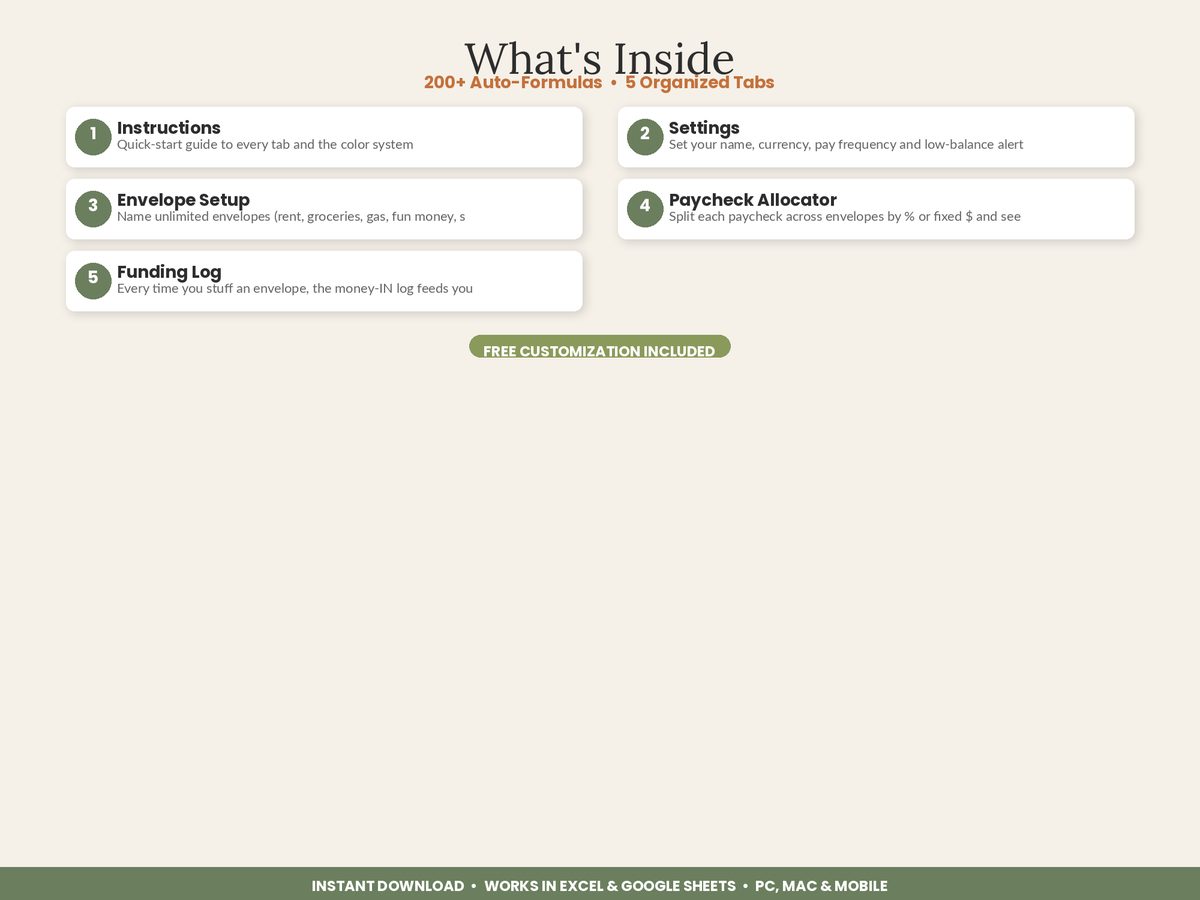
- Fully combined — all income goes into one pool; joint and personal envelopes are funded from it. Simplest, needs high trust.
- Fully separate — you each fund half of every joint envelope and keep the rest entirely your own.
- Hybrid (most popular) — each partner contributes an agreed share to the joint envelopes and keeps the remainder as personal money.
For the hybrid, the fairest split when incomes differ is proportional to income. If together you take home $6,000 and one partner earns $3,600 (60%) and the other $2,400 (40%), they fund the joint envelopes 60/40 rather than 50/50. Equal-income couples usually just split 50/50.
A worked example
Say your combined take-home is $6,000/month, with $3,400 in fixed bills on autopay (rent, utilities, insurance, phones, loan). That leaves $2,600. You decide $2,000 goes to joint envelopes and each partner takes $300 as personal money.
Joint envelopes ($2,000):
| Joint envelope | Amount |
|---|---|
| Groceries | $700 |
| Household / misc | $200 |
| Eating out together | $200 |
| Date night | $120 |
| Kids | $250 |
| Car maintenance (sinking fund) | $150 |
| Holidays / gifts (sinking fund) | $180 |
| Buffer | $200 |
| Total joint | $2,000 |
Personal envelopes: $300 each ($600 total). Grand total $2,600 — every dollar assigned.
Now fund the joint pool proportionally. If partner A earns 60% of income, A contributes $1,200 to the joint envelopes and B contributes $800. Each still keeps their own $300 personal envelope. Nobody audits the personal money — that’s the whole point.
Step 2: Use one shared record you can both see live
Here’s the problem physical cash can’t solve for couples: double-spending. You grab groceries on your lunch break; your partner grabs a few things on the way home. Neither of you knew the other was shopping, and the grocery envelope is now $60 over. With paper envelopes there’s no way to know in the moment.
The fix is a single shared record both partners can see in real time. When one of you logs a $60 grocery run, the other sees the balance drop the instant it happens — so nobody spends money that’s already committed. This is the number-one reason couples run shared envelopes digitally instead of on paper.
Step 3: Hold a 15-minute money date each payday
Systems don’t fail on the spreadsheet; they fail on communication. Once a payday — or, if you and your partner are paid on different schedules, on whichever check is the household’s main one — sit down for fifteen minutes: fund the envelopes, glance at what ran low last cycle, and adjust anything that’s consistently off. It’s short, it’s routine, and it replaces the tense “why did you spend that?” conversations with a calm shared plan. Couples who do this stop fighting about money because the plan, not the partner, sets the limits.
Step 4: A shared tracker keeps both of you honest and in sync
Running shared and personal envelopes, splitting contributions proportionally, and keeping balances live for two people is more than paper can handle. A cloud spreadsheet both partners can open on their phones does it effortlessly.
The Cash Stuffing & Cash Envelope Budget Tracker works in Google Sheets, so you can share one file and both log spending from anywhere — every entry updates the same live dashboard, so double-spending disappears. Its Paycheck Allocator lets each partner split their contribution into the joint envelopes by percentage or fixed dollars, and unlimited envelopes mean you can set up as many shared and personal categories as you need. Balances turn red the moment a joint envelope is overspent, so you both see it at once.
The bottom line
Cash stuffing works beautifully for couples when you split it into shared envelopes for joint costs and a personal envelope each for autonomy. Fund the joint pool 50/50 or proportionally to income, keep one live shared record so you never double-spend, and run a quick money date each payday. Structure the money and you stop managing each other — you manage the plan together.
New to the method? Start with the full walkthrough on how to set up a cash envelope budget for beginners.
Featured on ReadySheetGo
The Cash Stuffing & Cash Envelope Budget Tracker is built for two: share one Google Sheet, both log spending to a live colour-coded dashboard, split contributions by % or fixed $, and run unlimited shared plus personal envelopes. 9 tabs, Excel + Google Sheets, pre-filled samples. Instant digital download — $13.99.
Frequently Asked Questions
How do couples do cash stuffing together?
Couples run a set of shared envelopes for joint costs like groceries and household, funded by both incomes, plus a personal 'no-questions-asked' envelope for each partner. Both people log spending against the shared envelopes in one place so balances stay accurate, and each manages their own personal envelope however they like.
Should couples combine incomes for the envelope system?
You can fully combine, keep things separate, or use a hybrid where each partner contributes a share to joint envelopes and keeps the rest personal. The hybrid works best for most couples: joint bills and shared spending come from a common pool, while personal envelopes give each person autonomy without needing to justify every purchase.
How do you avoid double-spending from a shared cash envelope?
The key is a single shared record both partners can see in real time — usually a spreadsheet in the cloud rather than a physical envelope. When one person logs a grocery run, the other sees the balance drop immediately, so nobody spends money that's already gone. Physical cash can't do this, which is why most couples run shared envelopes digitally.
How should a couple split contributions to joint envelopes?
Two fair approaches: split 50/50, or split proportionally to income so the higher earner contributes a larger share. Proportional splitting tends to feel fairer when incomes differ a lot — if one partner earns 60% of the household total, they fund 60% of the joint envelopes.