How Many Cash Envelope Categories Should You Have?
You’re setting up the cash envelope system and hit the question that stalls most people: how many envelopes is right? Some videos show three; others show twenty-five colour-coded sleeves. Too few and the system doesn’t actually control your spending. Too many and it becomes so much work you quit by week three. Here’s the honest answer, plus exact setups for three stages so you can pick the one that fits you right now.
The short answer: five to eight for most people
If you want a number, it’s five to eight envelopes for the average person. That range is big enough to corral the categories where overspending actually happens, and small enough that maintaining it takes seconds a day rather than a chore you dread.
The reason isn’t arbitrary. The envelope system works through friction and visibility — you see a category running low and adjust. But every envelope you add is one more balance to track, one more decision each time you spend, and one more thing to reconcile. Past a certain point, the admin outweighs the benefit and you stop. Most people who abandon cash stuffing didn’t overspend their way out; they over-complicated their way out.
The rule for deciding what deserves an envelope
Give an envelope to a category only if both of these are true: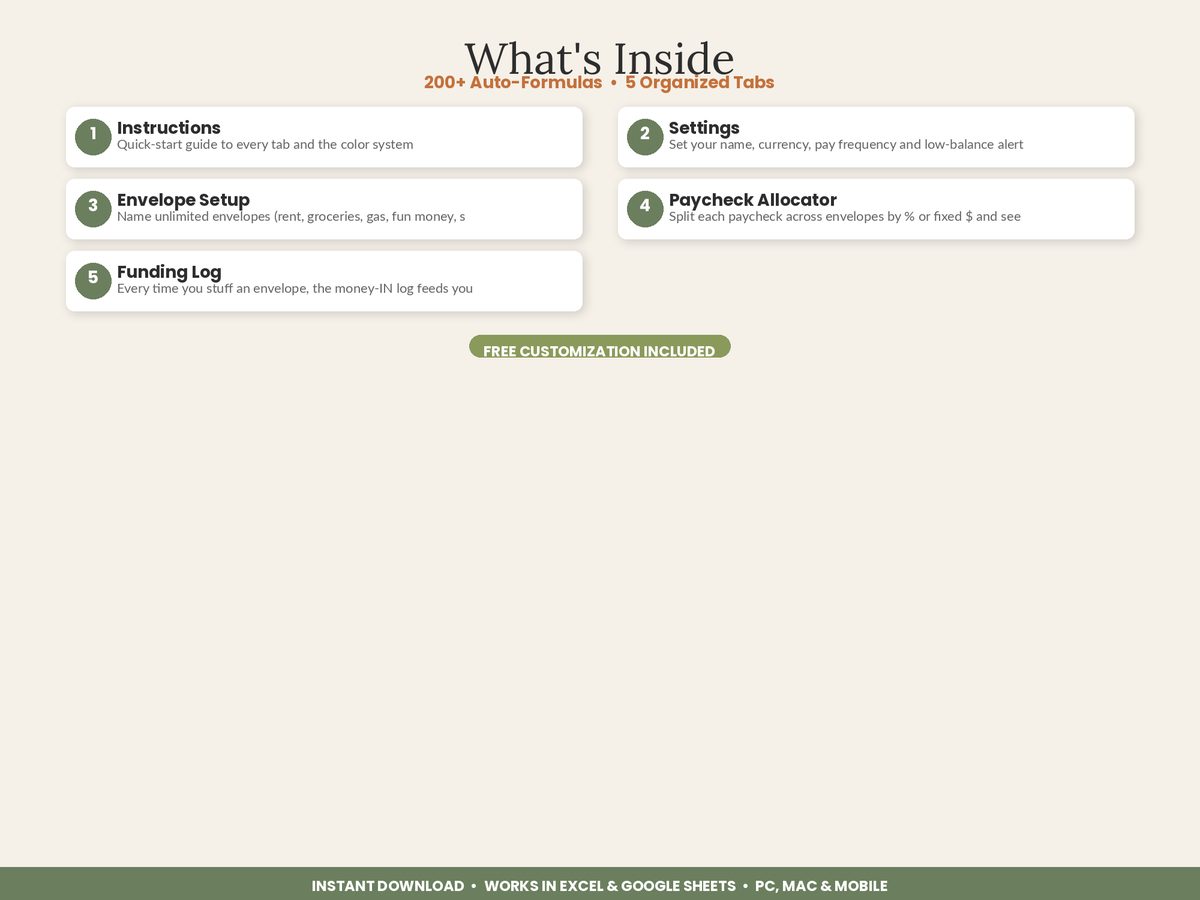
- It’s variable — the amount changes based on your choices (groceries, dining, fun) rather than being a fixed bill.
- It’s a place you actually overspend — there’s a real temptation or leak there.
Fixed bills fail the first test, so they stay on autopay. A category you never overspend fails the second, so it doesn’t need the friction of an envelope. This is why “rent” and “car insurance” don’t get envelopes but “eating out” almost always should.
Three setups by stage
Beginner: 5 envelopes
Just starting? Keep it lean so you actually stick with it.
- Groceries
- Gas / transport
- Eating out
- Fun money
- One sinking fund (car maintenance or gifts)
Five envelopes controls the four categories most people leak from, plus one forward-looking fund. You can run this in under a minute a day.
Intermediate: 8 envelopes
Comfortable after a month or two? Add the next layer of control.
- Groceries
- Gas / transport
- Eating out
- Fun money
- Personal care
- Household / miscellaneous (catch-all)
- Car maintenance (sinking fund)
- Christmas / gifts (sinking fund)
The household “catch-all” matters here — it absorbs the small odd purchases that don’t fit anywhere, so you’re not creating a new envelope every time you buy batteries.
Advanced: 10–12 envelopes
Only go here if you want granular control and will keep it up. Add specific sinking funds and split broad categories:
- The eight above, plus:
- Kids / school
- Pets
- Annual insurance premium (sinking fund)
- Vacation (sinking fund)
Past twelve, you’re usually better off using sub-categories inside a tracker rather than more envelopes — you get the detail without the daily overhead.
A quick worked example of “too many”
Say you’re tempted to split groceries into “produce,” “meat,” “pantry,” and “snacks.” On paper it looks organised. In practice, on a $500 grocery budget, you now have four little envelopes of roughly $125 each. One trip where you buy extra meat blows the meat envelope while pantry sits full — so you’re transferring money between grocery sub-envelopes at the checkout, every single shop. That’s four times the tracking for zero extra control, because it’s all still groceries. One $500 grocery envelope does the same job with none of the friction. Splitting only helps when the sub-categories have genuinely different limits you want to enforce.
Let the tracker carry the categories
The reason people cap out at a handful of paper envelopes is physical: more sleeves means more cash, more counting, more mess. Going digital removes that ceiling. A spreadsheet can hold as many envelopes as you like and still update every balance instantly, so you can be as granular as you want without the upkeep punishing you.
The Cash Stuffing & Cash Envelope Budget Tracker supports unlimited envelopes with a live colour-coded dashboard showing funded, spent, and remaining for each one — so you can start with five and add more only when the data shows a real leak, without ever re-doing your setup. Because it runs in Excel and Google Sheets, adjusting your category list takes a few seconds, not a trip to the bank.
The bottom line
Start with five envelopes, grow to about eight as you get comfortable, and only pass ten if you genuinely want the granularity and will maintain it. Give an envelope only to categories that are both variable and prone to overspending; leave fixed bills on autopay. The best number of envelopes is the largest one you’ll actually keep up with — for most people, that’s fewer than they first think.
For the full setup walkthrough, start with the main guide on how to set up a cash envelope budget for beginners.
Featured on ReadySheetGo
The Cash Stuffing & Cash Envelope Budget Tracker lets you run unlimited envelopes without the mess: live colour-coded dashboard, paycheck splitting by % or fixed $, automatic rollover, and pre-filled samples to copy. 9 tabs, Excel + Google Sheets. Instant digital download — $13.99.
Frequently Asked Questions
How many cash envelope categories should a beginner have?
Five to eight. That's enough to control your biggest variable spending — groceries, gas, eating out, fun money — plus a sinking fund or two, without becoming so fiddly that you abandon it. Start on the lower end and add an envelope only when you notice a specific category leaking money.
Is it bad to have too many cash envelopes?
Yes. Once you pass ten or twelve envelopes, the daily upkeep gets tedious, tiny categories run dry constantly, and you spend more time shuffling money between envelopes than actually saving. Most people who quit the envelope system quit because they made it too complicated, not too simple.
Should fixed bills like rent get their own envelope?
No. Fixed bills that are the same every month — rent, insurance, phone, loan minimums — should stay on autopay, paid straight from your account. Envelopes are for variable, tempting, easy-to-overspend money. Putting fixed bills in envelopes just adds clutter without changing your behaviour.
What cash envelope categories should I start with?
Groceries, gas or transport, eating out, and fun money cover where most overspending happens. Add personal care, a household/misc catch-all, and one or two sinking funds (car maintenance, gifts) as you go. Build from your real recent spending, not a template you found online.