How to Prove Income as a Server for an Apartment or Car Loan
You earn about $2,800 a month. The leasing office wants two recent pay stubs. Your stubs say $109.68 and $0.00.
This is the most predictable problem in tipped work, and it has almost nothing to do with how much you make.
Full walkthrough of the template used in this guide.
Why the Pay Stub Fails
From the worked June in the pillar guide — a server at one venue on a $2.13 cash wage, a bartender at another on $9.00:
| Monthly | Annualised | |
|---|---|---|
| Cash wages (what a stub shows as gross pay) | $604.68 | $7,256 |
| Tips kept after tip-out | $2,217.00 | $26,604 |
| Actual income | $2,821.68 | $33,860 |
Your wages are 21.4% of your income. Hand over stubs and nothing else and you have just told a leasing office you earn $7,256 a year.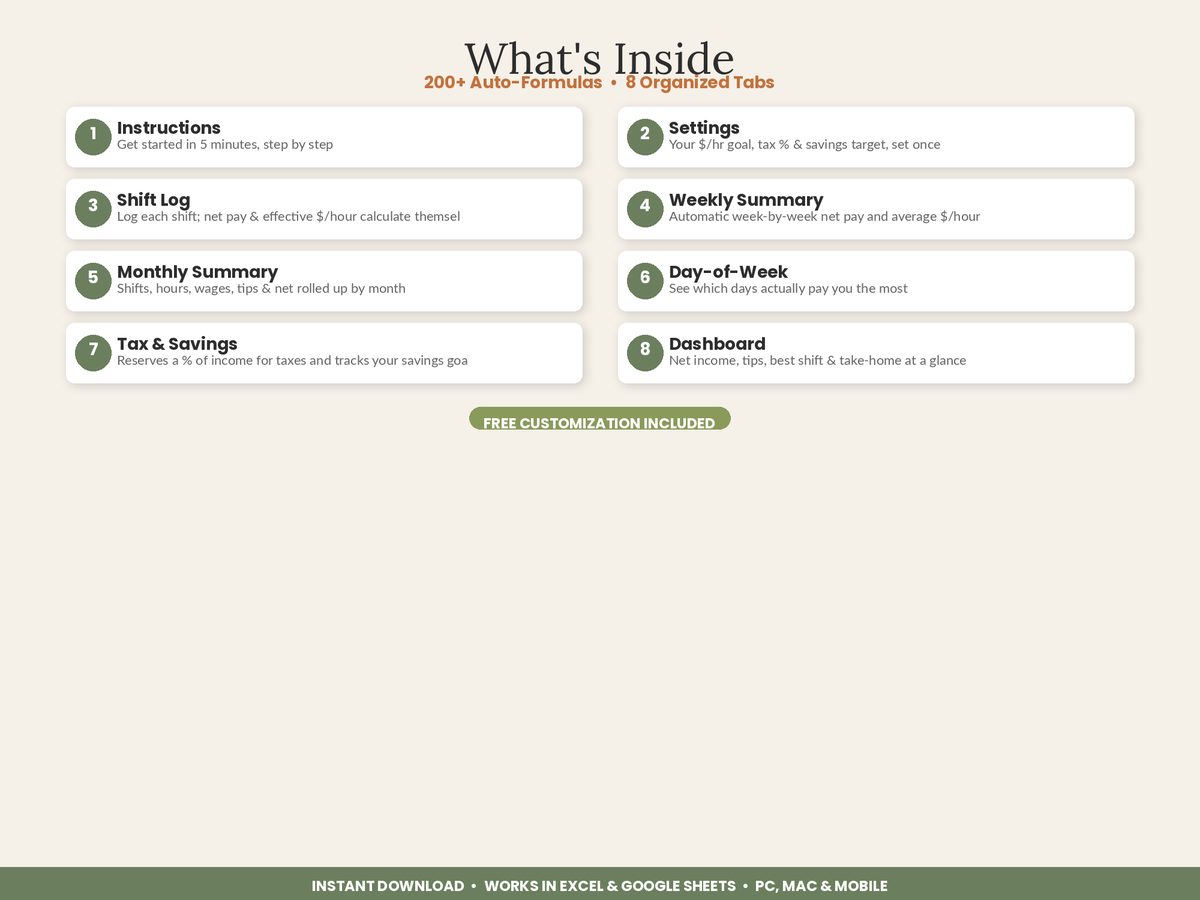
Run the standard 3x-monthly-income rule on both numbers:
| Income figure used | Rent it qualifies for (3x rule) |
|---|---|
| Pay stub gross ($604.68/mo) | $201.56 |
| Documented total income ($2,821.68/mo) | $940.56 |
Same person, same job, same month. The gap is entirely a documentation problem.
And it gets worse before it gets better: at a $2.13 cash wage, withholding on your tips often consumes the whole paycheck, so the net figure on the stub can read $0.00. There is no version of that document that helps you.
The Seven-Document Pack
Bring these, unasked, in one PDF or folder. Volunteering a complete pack does more for you than any single document, because it moves you from “applicant with a problem” to “applicant who has clearly done this before.”
1. Last two W-2s. Card tips and any cash tips you reported are in Box 1 and Box 7. This is the strongest single document you have, because it comes from your employer, not from you.
2. Last two tax returns (Form 1040). Independent confirmation of the same figure. Underwriters weight these heavily.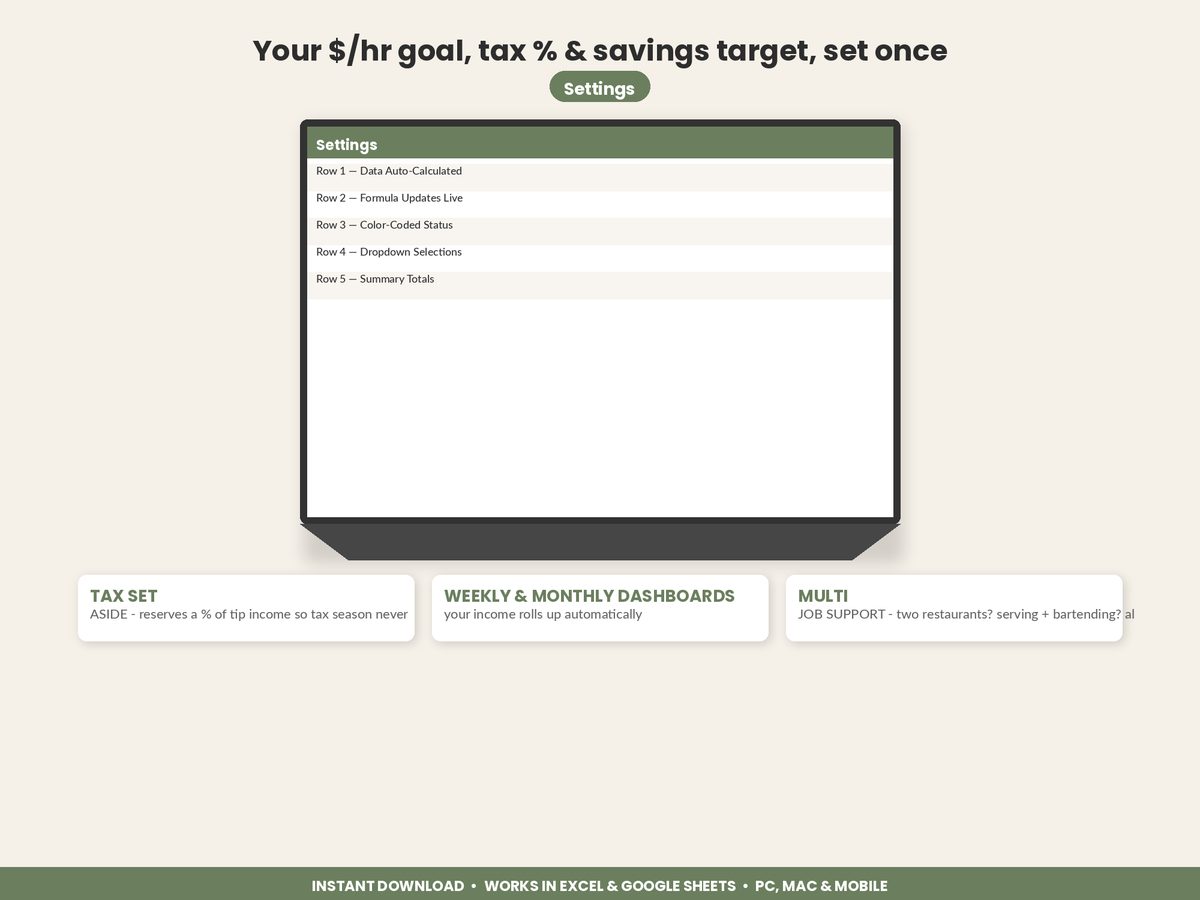
3. Three months of bank statements. Shows money actually arriving. If your cash tips are deposited, they show up here — which is the whole reason to deposit them.
4. Pay stubs from every employer, with the year-to-date boxes. Yes, include them. They’re weak alone but they establish employment and the YTD box shows more than the current-period box.
5. A signed employer letter. Role, start date, average scheduled hours, and — if your manager will state it — typical total earnings. A paragraph on letterhead. Most managers have written this before; ask early in the week, not on a Friday night.
6. Your shift log, printed or exported. Three to six months, dated, with hours and totals. On its own it proves nothing — you wrote it. Alongside bank statements that match it, it becomes the document that ties everything together and explains the pattern.
7. If any income is 1099 — banquet work, private events, contracted bartending — the 1099-NEC and the Schedule C from your return.
The Cash Problem
Of the worked month’s income, $683 arrived as cash. Annualised: $8,196, about a quarter of total income.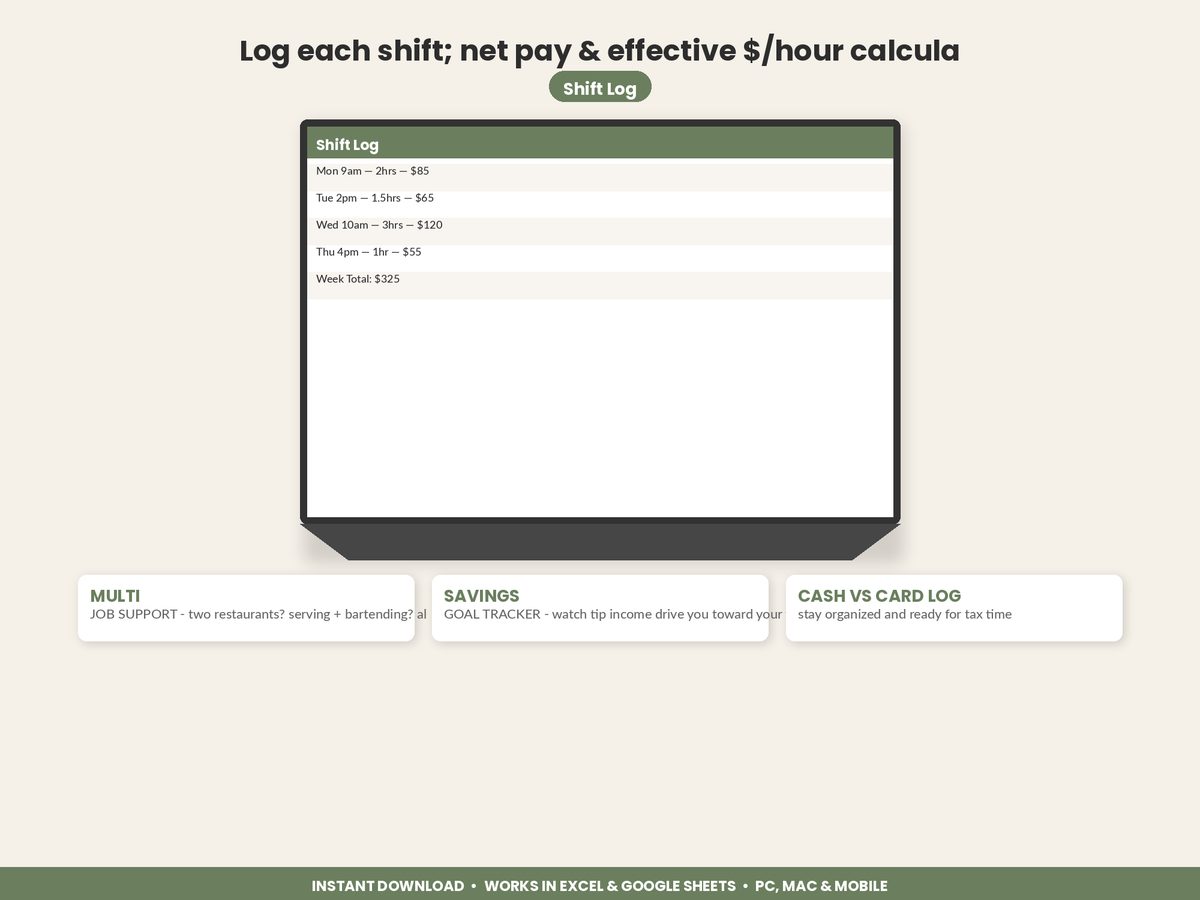
Cash you keep in an envelope does not exist to a landlord, an underwriter, or a credit department. It’s not that they doubt you — they have no mechanism to see it.
Two habits fix this, and they take a few months to work, which is why they’re worth starting before you need them:
- Deposit cash tips on a schedule. Weekly, same day, into the same account. Regular deposits of similar size read as income. Sporadic large deposits read as something to ask about.
- Report cash tips to your employer. Reported tips land on your W-2, which is the document with the most weight. Unreported cash is invisible and it lowers the earnings your future Social Security benefit is calculated from. How reporting interacts with what you owe.
A server who deposits and reports has a $33,860 paper trail. A server who doesn’t has a $7,256 one and the same lifestyle, which is exactly the profile that gets declined.
What the Numbers Need to Clear
Different gatekeepers use different rules. Know which one you’re facing:
| Rule | Applied to $2,821.68/month | Qualifies for |
|---|---|---|
| 3x monthly income (common for rentals) | $2,821.68 ÷ 3 | $940.56 |
| 40x annual income | $33,860 ÷ 40 | $846.50 |
| 2.5x monthly income (more lenient) | $2,821.68 ÷ 2.5 | $1,128.67 |
For a car loan the relevant number is usually debt-to-income rather than a multiple, but the input is the same: documented monthly income. Everything above still applies.
The Averaging Trap
Mortgage lenders commonly want to see a history of tip income before counting it — often around two years — and then average it rather than using your current rate.
If last year came in at $30,000 and this year is running at $33,860:
(30,000 + 33,860) ÷ 24 = $2,660.83 a month
That’s $160.85 a month below your actual run rate, and it’s the figure the file will use. Nothing is wrong; averaging is just how it works, and it means a rising income always gets undersold slightly.
Two implications. First, if your income is climbing, a complete record across the whole period is what lets you show the trend rather than only the average. Second, if you’re planning a mortgage, the two years before you apply are the ones that matter — which is an argument for reporting your tips properly well ahead of time rather than in the year you need the loan.
Confirm the specifics with your own lender; guidelines vary by loan type and by lender overlay.
Six Weeks Before You Apply
A short, boring checklist that changes outcomes:
- Start depositing cash tips weekly. Even six weeks of a visible pattern beats none.
- Pull your last two W-2s and returns now, not the night before.
- Ask for the employer letter early.
- Print three to six months of your shift log and check the monthly totals line up with your bank statements. If they don’t, find out why before an underwriter does.
- Total your real monthly income so you can say the number confidently instead of estimating on the spot.
- Know which rule you’re being measured against and whether your documented figure clears it — before you pay an application fee.
The last one is the whole point. Most tipped workers who get declined weren’t short on income. They were short on the version of it somebody else could see.
Featured on ReadySheetGo
Server, Bartender & Tipped Worker Income Tracker — $11.99
The Monthly Summary tab produces exactly the document this article calls for — month-by-month shifts, hours, wages, tips and net pay for the whole year, printable or exportable to PDF. The 200-row Shift Log keeps a dated record of every shift with cash tips, card tips and tip-out separated, so your monthly figures reconcile against bank deposits line by line. Settings holds up to five venues, so a two-job income comes out as one consistent total rather than two half-stories. The Income Dashboard gives you the single number to quote — total net income, hours, shifts and average net per shift — and the Weekly Summary shows the consistency an underwriter is looking for. Eight tabs, sample data pre-filled. Works in Excel and Google Sheets.
Get the Server, Bartender & Tipped Worker Income Tracker →
Part of the complete guide to tracking tips as a server. This is general information, not financial or legal advice — lender and landlord requirements vary, so confirm what yours will accept before you apply.
Frequently Asked Questions
How do servers prove income for an apartment?
With a pack, not a pay stub. Bring the last two W-2s, the last two tax returns, three months of bank statements, pay stubs from every employer showing the year-to-date boxes, a signed employer letter stating your role and average hours, and a printed shift log covering three to six months. The stub alone understates a tipped worker badly — in the worked example below it shows $604.68 a month against $2,821.68 of actual income.
Do cash tips count as income for a loan or lease?
Only if they are documented. Cash tips reported to your employer appear on your W-2 and on your tax return, which underwriters accept. Cash you never reported and never deposited does not exist as far as any lender is concerned — in the worked example that would be $8,196 a year, about a quarter of total income, invisible. Depositing cash tips into your bank account regularly is the cheapest thing a tipped worker can do to make future borrowing possible.
How much rent can a server making $2,800 a month afford?
Under the common 3x-monthly-income rule, $2,821.68 of monthly income qualifies for about $940 of rent. Under a 40x-annual-income rule it is $846.50. Under a more lenient 2.5x rule it is about $1,129. The figure that matters is which rule the building uses and which income number they apply it to — under the same 3x rule, a building working from your pay stub instead of your documented total income puts the same person at about $202.
Do mortgage lenders count tip income?
Commonly yes, but they typically want to see a history of it — often around two years — and then average it rather than using your best recent month. Averaging cuts both ways: a year at $30,000 followed by a year at $33,860 averages to $2,660.83 a month, below your current run rate. If your income is trending up, having a complete, consistent record for the full period is what stops the earlier weaker year from being the only story your file tells. Confirm the specifics with your lender.