Klarna vs Afterpay vs Affirm: Which One Actually Costs More
You’re at checkout and there are three Buy Now, Pay Later logos to choose from — Klarna, Afterpay, Affirm — all offering to split the same purchase into payments. They look interchangeable, and for a plain “Pay in 4” split with no interest, they mostly are. But that’s not the whole story, and the gap between the cheapest and most expensive way to finance the exact same purchase can be real money if you don’t look past the logo.
The mistake isn’t picking the “wrong” company. It’s assuming any option under a given brand behaves the same way every other option under that brand does. Klarna offers more than just Pay in 4. Affirm offers both 0% and interest-bearing plans on the same platform. The comparison that actually matters isn’t Klarna vs. Afterpay vs. Affirm — it’s which specific plan you were offered at that specific checkout.
What’s actually the same across all three
For the most common use case — splitting a purchase into four equal payments every two weeks — Klarna, Afterpay, and Affirm’s short-term Pay-in-4-style products work almost identically:
- No credit check that affects your score for most short-term plans (this can differ for larger purchases or longer terms)
- No interest charged if every payment is made on time
- The first installment is usually charged at the moment of purchase
- The remaining installments are billed automatically to the card on file
If that’s the only kind of plan you ever use, the “which is cheapest” question mostly doesn’t apply — assuming every payment lands on time, a $200 purchase split four ways costs $200 either way, no matter which of the three names is on it.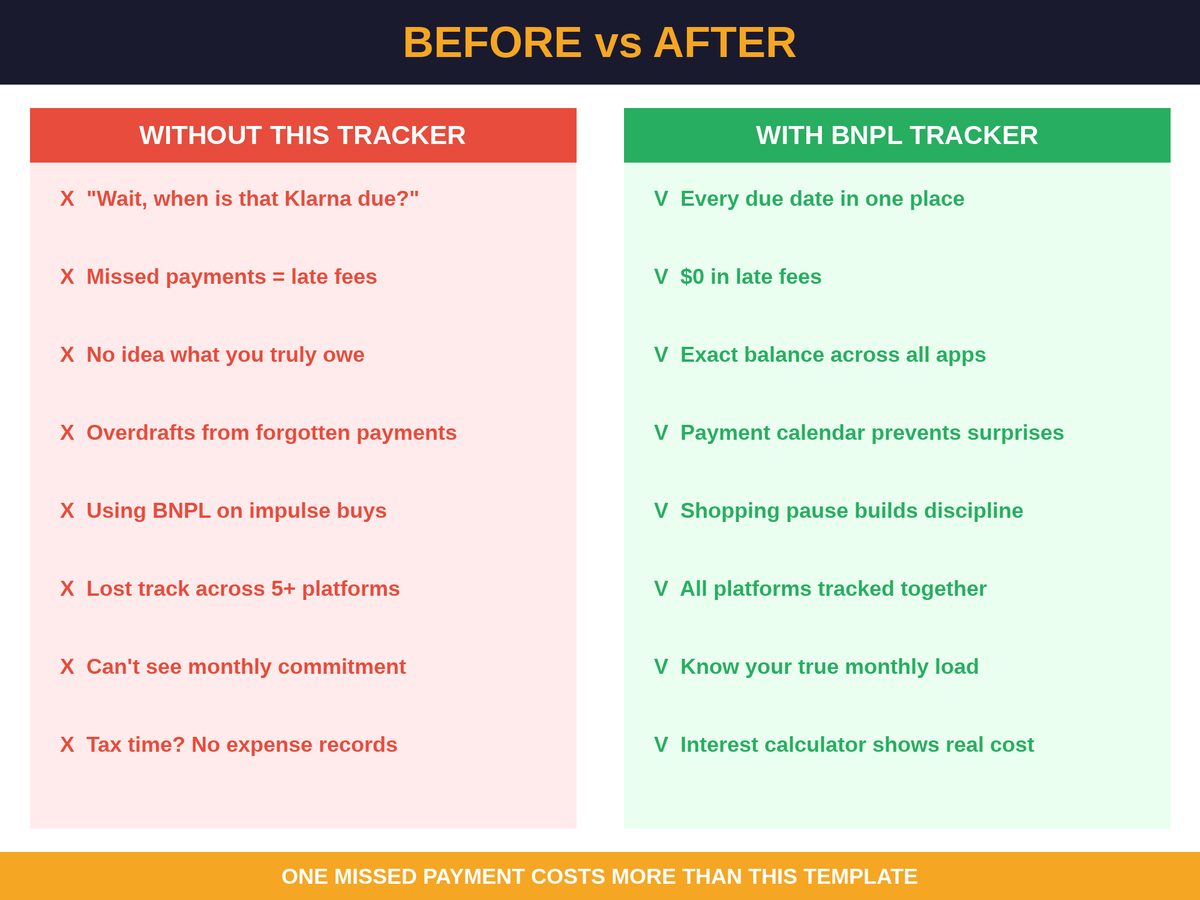
Where they actually diverge
The cost difference shows up in three places, and none of them is the brand name:
1. Longer-term, interest-bearing plans. Affirm is the platform built around this — beyond Pay-in-4, it offers monthly installment plans that run for several months and can carry a real APR, sometimes into the double digits, depending on the retailer, the item, and your approval terms. Klarna also offers longer financing options beyond its interest-free Pay in 4. The interest-free Pay-in-4 version of any of these three companies costs nothing extra; the longer financing version of any of them can cost real money, and the only way to know which one you’re being offered is to read the terms screen before confirming, not the logo before that.
2. Late payment terms. What happens if a payment is missed differs by plan and has changed over time on more than one platform, so it’s worth reading the specific terms attached to your plan rather than assuming a fixed number. Some plans pause future purchases on that account until the balance is current; others attach a fee. Either way, the cost of being late is set by the plan you’re in, not a rule you can guess from the company name.
3. What “0%” actually applies to. A 0% APR badge at checkout for an Affirm plan (or a promotional Klarna plan) usually applies to that specific offer, from that specific retailer, and isn’t a blanket guarantee on every purchase you make with that provider going forward. The next item you finance through the same app, from a different retailer, can be offered on different terms entirely.
Worked comparison: the same $600 purchase, three ways
Here’s a hypothetical comparison to show how the math actually works — plug your own checkout terms into the same structure to see your real numbers.
| Plan | Structure | Interest | Total paid if on time |
|---|---|---|---|
| Klarna Pay in 4 | 4 payments, biweekly | 0% | $600 |
| Afterpay Pay in 4 | 4 payments, biweekly | 0% | $600 |
| Affirm, 6-month plan at 15% APR (illustrative) | 6 monthly payments | 15% APR | approx. $625–$635 |
On a straightforward Pay-in-4 split, all three plans above land at the same $600 total. The only plan that costs more is the longer, interest-bearing Affirm option — and that’s not because Affirm is inherently pricier than Klarna or Afterpay, it’s because a 6-month interest-bearing plan is a fundamentally different product than a 0% four-payment split. The same comparison would flip if Affirm offered 0% financing on this exact purchase and Klarna’s only option was its own interest-bearing product instead.
The rate above (15% APR) is an illustrative assumption to show the math, not a quoted rate from any provider — always use the actual APR shown on your own checkout screen, since it varies by retailer, item, and applicant.
The one-question rule for choosing at checkout
Before clicking through any BNPL option, answer one question: is this specific plan interest-free, and does every payment land before my next paycheck without straining it? If yes to both, the specific brand genuinely doesn’t matter much for cost. If the plan shows an APR, or the payment schedule runs past your comfort zone, that’s the plan to skip — regardless of which of the three names is attached to it.
Track all three the same way, whichever you pick
Because you can end up with active plans on more than one of these platforms at once — a Klarna plan from one retailer, an Affirm plan from another — the comparison above only matters once. After that, the plans need to live in one tracker together so you can see the total obligation across all of them, not just the one you’re currently paying attention to.
The Buy Now Pay Later Tracker Spreadsheet includes a Platform Summary tab that totals what’s owed on Klarna, Afterpay, Affirm, PayPal Pay in 4, Apple Pay Later, and Zip separately, plus an Interest Calculator built specifically for the interest-bearing plans described above — enter the amount, rate, and term, and it returns the true cost versus paying upfront, so an Affirm plan’s real price is a number you calculated rather than a guess.
Featured on ReadySheetGo
Buy Now Pay Later Tracker Spreadsheet — $9.99
11 tabs, 1,092 automatic formulas, including a Platform Summary that separates what you owe by provider and an Interest Calculator with a full amortization schedule for any interest-bearing plan. Works in Excel and Google Sheets.
The bottom line
Klarna, Afterpay, and Affirm aren’t priced against each other — the specific plan you’re offered at a specific checkout is what sets the cost, and all three companies offer both interest-free and interest-bearing products. Read the terms screen before you confirm, not the logo before that, and once you’ve got more than one plan running across different platforms, track them together so the total cost is a number you know rather than one that surprises you.
Frequently Asked Questions
Is Klarna, Afterpay, or Affirm cheapest?
It depends entirely on which product you pick from each company, not the brand name. Klarna and Afterpay's standard 'Pay in 4' plans are typically interest-free if paid on time, and so is Affirm's 0% promotional financing when it's offered. The expensive option on any of the three is a longer-term installment plan that carries real APR — sometimes well into double digits — which only shows up if you read the terms at checkout rather than assuming every BNPL option works the same way.
Does Affirm always charge interest?
No. Affirm offers both 0% APR plans (often for specific retailers or promotions) and interest-bearing plans that can run into the double digits, and which one you're offered depends on the retailer, the purchase, and your own approval terms at checkout. The APR is disclosed before you confirm the plan — the mistake is clicking through checkout without reading which type you were just offered.
Do Klarna and Afterpay charge late fees?
Policies vary by plan type and have changed over time, so the only reliable answer is the one printed in your own plan's terms at checkout, not a blanket rule for the whole company. Read the specific late-payment terms shown when you select Pay in 4, since that's the number that applies to your purchase, not a general reputation either platform has.
Why do Klarna, Afterpay, and Affirm all show up at the same checkout?
Retailers often integrate more than one BNPL provider so shoppers can pick whichever one they already have an account with, which is also why the same $200 purchase can show three different provider logos at checkout. That convenience is exactly why it's easy to end up with plans open on more than one platform without ever comparing their terms.