Pet Insurance Hit $5.2 Billion in 2025 — but Only 4.27% of US Pets Are Covered. Should Yours Be?
Pet insurance is having a moment on paper. According to NAPHIA’s State of the Industry Report — the 2026 edition, covering calendar year 2025 — North American coverage reached about 7.6 million animals, US enrollment grew roughly 9% year over year, and gross written premium in the US climbed 20.8% to $5.2 billion. A decade of double-digit growth, a booming category.
And yet, here’s the number that should stop every pet owner: just 4.27% of US pets actually carry a policy, as Insurance Business reported. Dogs lead at about 5.99%, cats trail at 2.29%. Put plainly: more than 19 out of 20 US pets are uninsured. The overwhelming majority of owners are self-funding vet care — most of them without ever having decided to.
Full walkthrough of the template used in this guide.
“Uninsured” Isn’t a Non-Decision
That’s the part worth sitting with. If you don’t have pet insurance, you haven’t opted out of paying for risk — you’ve just chosen to pay for it yourself, out of pocket, whenever it happens to strike. That can absolutely be the right call. Self-funding beats insurance for plenty of healthy pets. But it’s only the right call if you’ve actually run the math and set money aside. For most of that 95%, “no insurance” isn’t a plan; it’s the absence of one.
The rising premiums make the choice sharper, not simpler. NAPHIA’s data shows premium growth outpacing policy-count growth, meaning rates are climbing — the average annual accident-and-illness premium for dogs sits around $749, roughly $62 a month. Over a pet’s life that’s real money flowing out whether or not you ever file a claim. So which is smarter for your pet: paying the premium, or banking it?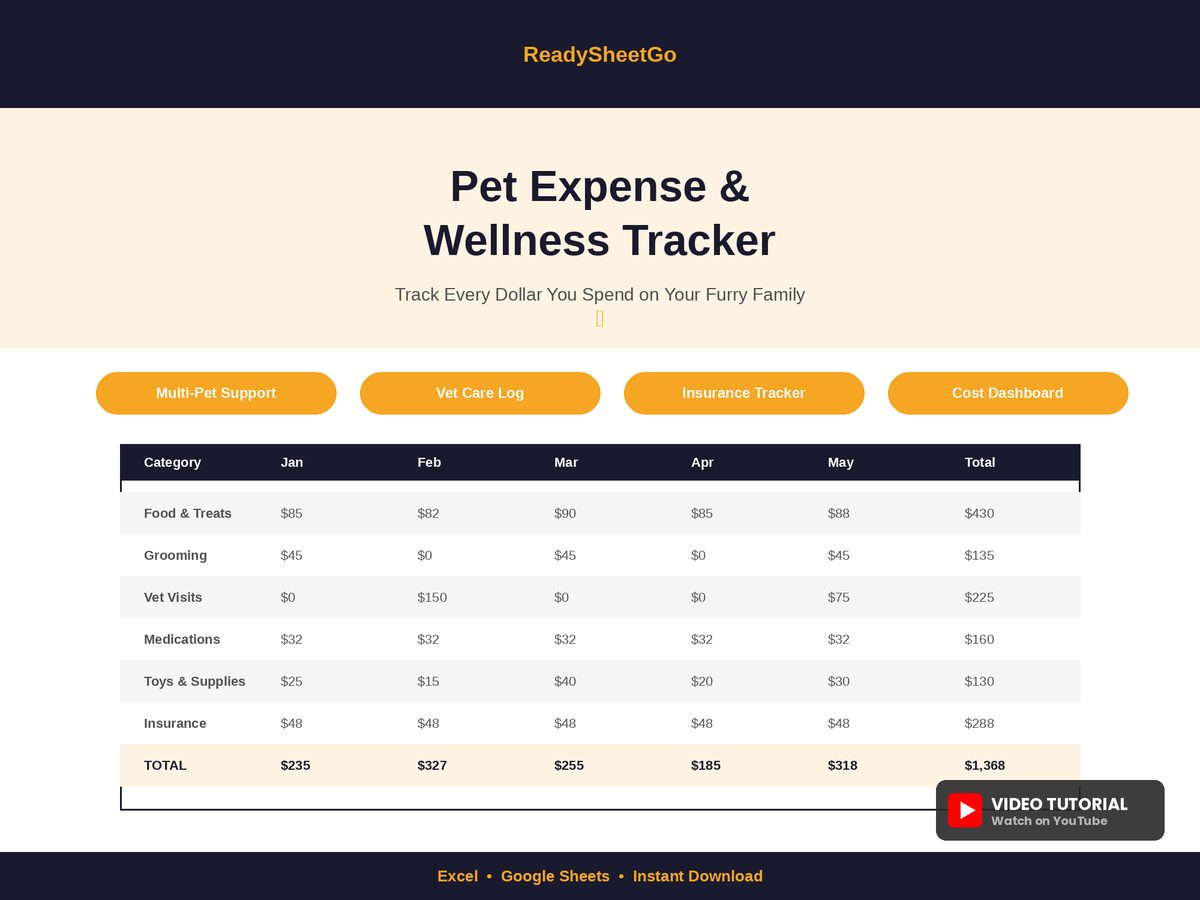
Answer It With Numbers, Not a Hunch
There are exactly two ways to be smart here, and both require tracking.
If you’re insured, the only honest test is ROI. Log every premium you pay and every dollar the insurer actually reimburses — not the vet bill, but the check after your deductible and reimbursement percentage. Subtract premiums from payouts. A positive number means the policy has earned its keep; a negative one means you’re paying for peace of mind, which is a valid choice as long as you know you’re making it. Most owners have no idea which side of that line they’re on because they’ve never added it up.
If you’re self-funding, run the mirror image. Set aside the equivalent of a premium every month into a dedicated pet emergency fund, and track that balance against the real vet bills you face. The danger of self-insuring is the timing gap — a $5,000 emergency that arrives before your fund is big enough to cover it. Tracking the fund’s growth tells you exactly when you’re actually protected versus still exposed.
The Pet Expense & Wellness Tracker from ReadySheetGo is built to run both sides of this decision. Its Pet Insurance tab logs premiums, tracks deductible progress, records claims filed versus paid, and calculates your insurance ROI automatically. Its Emergency Fund tab lets self-funders set a savings goal and watch their progress toward it. Whichever path you choose, you can see whether it’s actually working.
Join the 4% — or Beat It Deliberately
The story behind the $5.2 billion headline isn’t really about an industry milestone. It’s that the vast majority of pet owners are carrying vet-cost risk with no system for it at all. You don’t have to buy a policy to be in the smart minority. You just have to decide on purpose — insured or self-funded — and back the decision with numbers instead of hoping the big bill never comes.
Whatever you choose, choose it with the math in front of you.
Featured on ReadySheetGo
Pet Expense & Wellness Tracker — Make the pet-insurance call with real data. The Pet Insurance tab tracks premiums, deductible progress, and claims filed vs. paid with an automatic ROI calculation, while the Emergency Fund tab helps self-funders hit a savings goal. Plus a vet care log, medications tracker, 9-category expense tracker, and a lifetime cost projector — 8 tabs, 200+ formulas, up to 4 pets. Works in Excel and Google Sheets, no macros. Instant digital download — $12.99.
Frequently Asked Questions
What percentage of pets in the US have pet insurance?
Just 4.27% of US pets carry an insurance policy, according to NAPHIA's State of the Industry data reported by Insurance Business. Dogs are more likely to be covered than cats — about 5.99% of dogs versus 2.29% of cats. Despite a decade of double-digit industry growth, the overwhelming majority of US pets remain uninsured, meaning most owners are self-funding vet bills whether they've planned for it or not.
How big is the pet insurance industry?
In calendar year 2025 — the most recent full year reported — North American pet insurance reached about 7.6 million covered animals, with US enrollment growing roughly 9% year over year. Gross written premium in the US climbed 20.8% to $5.2 billion, and premium growth outpaced the growth in policy count — a sign that average premiums and rates are rising, not just the number of policies.
How much is the average pet insurance premium?
NAPHIA reported the average annual accident-and-illness premium for dogs at about $749 in its most recent data, which works out to roughly $62 a month; cat premiums typically run lower. Your actual quote depends on breed, age, location, deductible, and reimbursement percentage — which is why tracking what you pay against what the policy actually reimburses is the only way to know if it's worth it for your pet.
How do I decide if pet insurance is worth it for my pet?
Track two running totals: every premium you pay, and every dollar the insurer actually reimburses you after your deductible and co-pay. Subtract premiums from reimbursements to get your real ROI. If you're not insured, do the mirror-image version — build an emergency fund equal to what a policy would cost and track it against the vet bills you actually face. Either way, a spreadsheet turns the decision from a guess into a number you can read.