Pet Care Costs Are Rising Twice as Fast as Inflation in 2026 — and Owners Are Cutting Visits
If your last vet bill made you wince, it isn’t your imagination and it isn’t just your clinic. Pet services, including veterinary care, rose about 5.1% as of February 2026 — more than double the 2.4% overall consumer price index over the same period. And that’s the recent slice of a much longer trend: veterinary costs have climbed roughly 67% since 2014, according to industry data covered by Fortune, against general inflation of about 40% over the same years.
The costs aren’t just rising. They’re changing how people care for their pets — and not for the better.
Full walkthrough of the template used in this guide.
Owners Are Responding by Doing Less
Faced with bigger bills, a lot of pet owners are quietly pulling back. Companion animal visits fell about 3% in 2025, the American Veterinary Medical Association reports — the third year in a row of declining patient volume. And 81% of surveyed veterinarians said clients were more sensitive to cost in 2025 than the year before, up from 72% in 2024.
What does “more cost-sensitive” look like in practice? Delaying wellness visits. Stretching the interval between checkups. Declining a recommended test or procedure. Each of those feels like a reasonable money-saving move in the moment. The problem is the math: a skipped dental cleaning or a missed early diagnosis often turns into a much larger bill down the road. Cutting care to save money frequently costs more money later — plus the thing no spreadsheet can price, which is your pet’s health.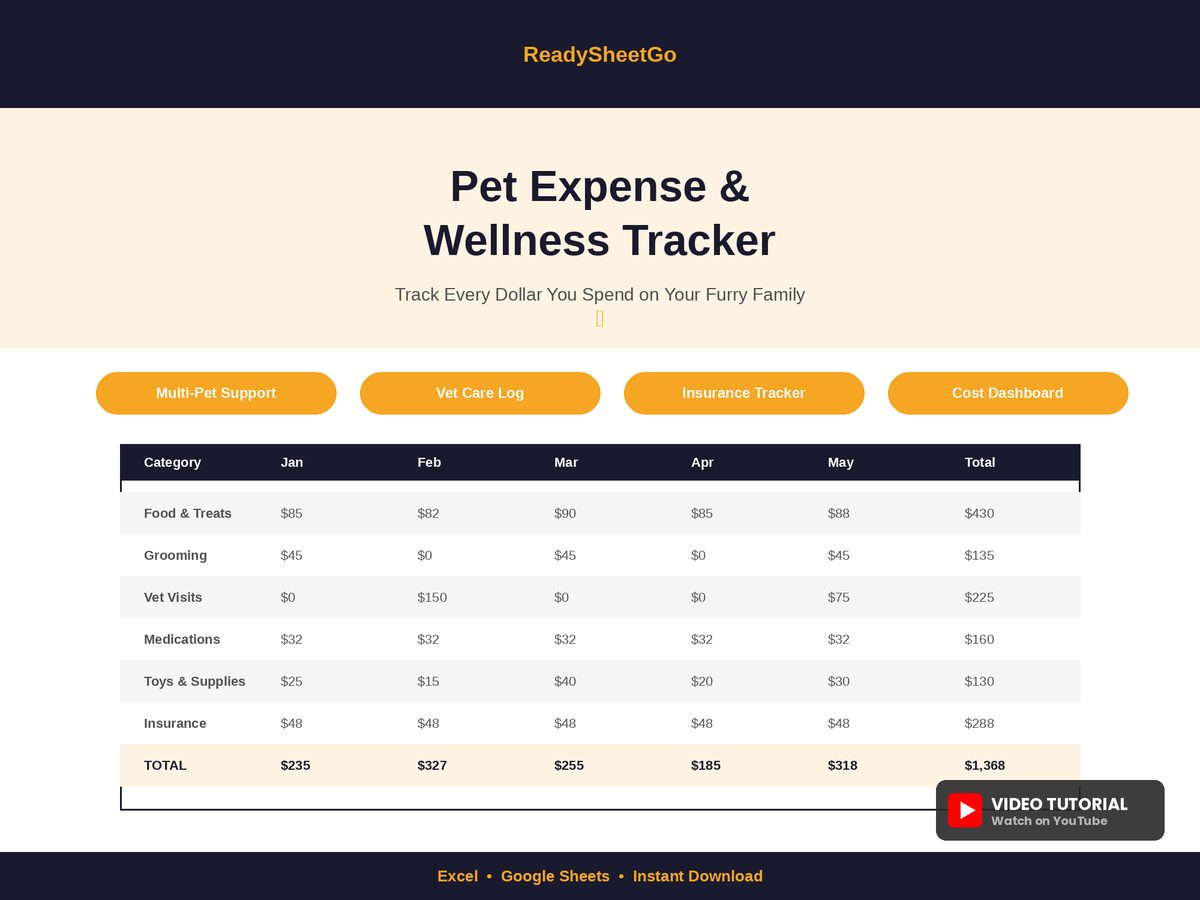
Why Vet Prices Keep Climbing
The increases aren’t arbitrary. The cost of medical equipment, medications, and supplies has risen sharply, and a genuine labor shortage in the veterinary field has pushed up wages for veterinarians, technicians, and support staff. Modern clinics also offer more advanced diagnostics and treatments than they did a decade ago — better medicine, but at a higher price. None of that is reversing soon, which means the smart response isn’t hoping costs fall. It’s getting a grip on what you actually spend.
The Move That Beats Skipping Care: Tracking It
Here’s the trap. When every pet expense lands in the same undifferentiated blur on your debit card, rising costs feel like a vague, stressful fog — “everything’s more expensive” — and the only lever that feels available is doing less. But you can’t manage what you can’t see.
Break your pet spending into categories and the fog clears. Suddenly you can see that food crept up, that the preventatives are billed in one painful annual lump, that the “surprise” emergency last spring was actually the second one this year. Once the numbers are visible, you get real levers: build an emergency fund so a big bill is a withdrawal instead of a credit-card event, run the numbers on whether insurance makes sense for your pet, and protect the preventative care that’s cheaper than the emergencies it prevents.
The Pet Expense & Wellness Tracker from ReadySheetGo is built for exactly this environment. It tracks nine expense categories with automatic monthly and annual totals, logs every vet visit with its cost, keeps a medications tracker, and runs an emergency fund with visual progress — so instead of reacting to rising costs by cutting your pet’s care, you can see them coming and plan around them.
Don’t Let the Trend Make Your Decisions For You
The headline story of 2026 pet care is owners letting cost quietly dictate medical choices — and often paying more, in dollars and in worry, as a result. The counter-move is simple and entirely in your control: measure what your pet costs, category by category, so that when the next bill lands, you’re making a decision from data instead of dread.
Vet prices will keep rising. Whether that turns into skipped care and surprise debt, or a planned and funded budget, comes down to whether you’re tracking.
Featured on ReadySheetGo
Pet Expense & Wellness Tracker — Get ahead of rising pet costs with 8 tabs and 200+ auto-calculating formulas. Track 9 expense categories with monthly and annual totals, log every vet visit and medication, run a pet insurance ROI calculator, build an emergency fund with progress tracking, and project your pet’s lifetime cost — across up to 4 pets. Works in Excel and Google Sheets, no macros. Instant digital download — $12.99.
Frequently Asked Questions
How much have pet care costs risen in 2026?
Pet services, including veterinary care, rose about 5.1% as of February 2026 — more than double the 2.4% overall consumer price index over the same period. Zooming out, veterinary costs have climbed roughly 67% since 2014, far outpacing the roughly 40% rise in general CPI over that stretch. Medical equipment, medications, and a veterinary labor shortage driving up wages are the main forces behind the increases.
Why are pet owners cutting back on vet visits?
Because prices have outrun budgets. Companion animal visits fell about 3% in 2025 — the third straight year of declining volume — and 81% of surveyed veterinarians said clients were more cost-sensitive in 2025 than the year before, up from 72%. Owners are delaying wellness care, stretching intervals between visits, and declining recommended procedures to save money, which can turn a small manageable issue into a large expensive one later.
How can I keep pet costs from getting out of control?
You can't manage what you don't measure. Track every pet expense by category — food, vet, medications, grooming, insurance, emergencies — so you can see exactly which costs are rising and by how much. Once the numbers are visible you can act: build an emergency fund so a big bill isn't a crisis, evaluate whether insurance pencils out, and keep up with preventative care that's cheaper than the emergencies it heads off.
Is it cheaper to skip wellness visits to save money?
Usually not, over time. Skipping preventative and wellness care is one of the main ways owners try to cut costs, but it often trades a small predictable expense for a large unpredictable one — an untreated dental problem, a missed early diagnosis, a lapsed preventative leading to heartworm. A better approach is to budget for routine care deliberately and build a separate emergency fund, so the real emergencies don't force you to gamble on your pet's health.